Skip to content
Talk to a Trucking Lawyer

Practice Area

Hydroplaning & Weather-Related Truck Accident Lawyers

Rain, ice, and fog don’t excuse unsafe driving. Truck drivers are expected to slow down in poor road conditions and keep their tires in safe condition. When they don’t, we hold them accountable.

Free. Confidential. No obligation.

Bad weather is not a defense

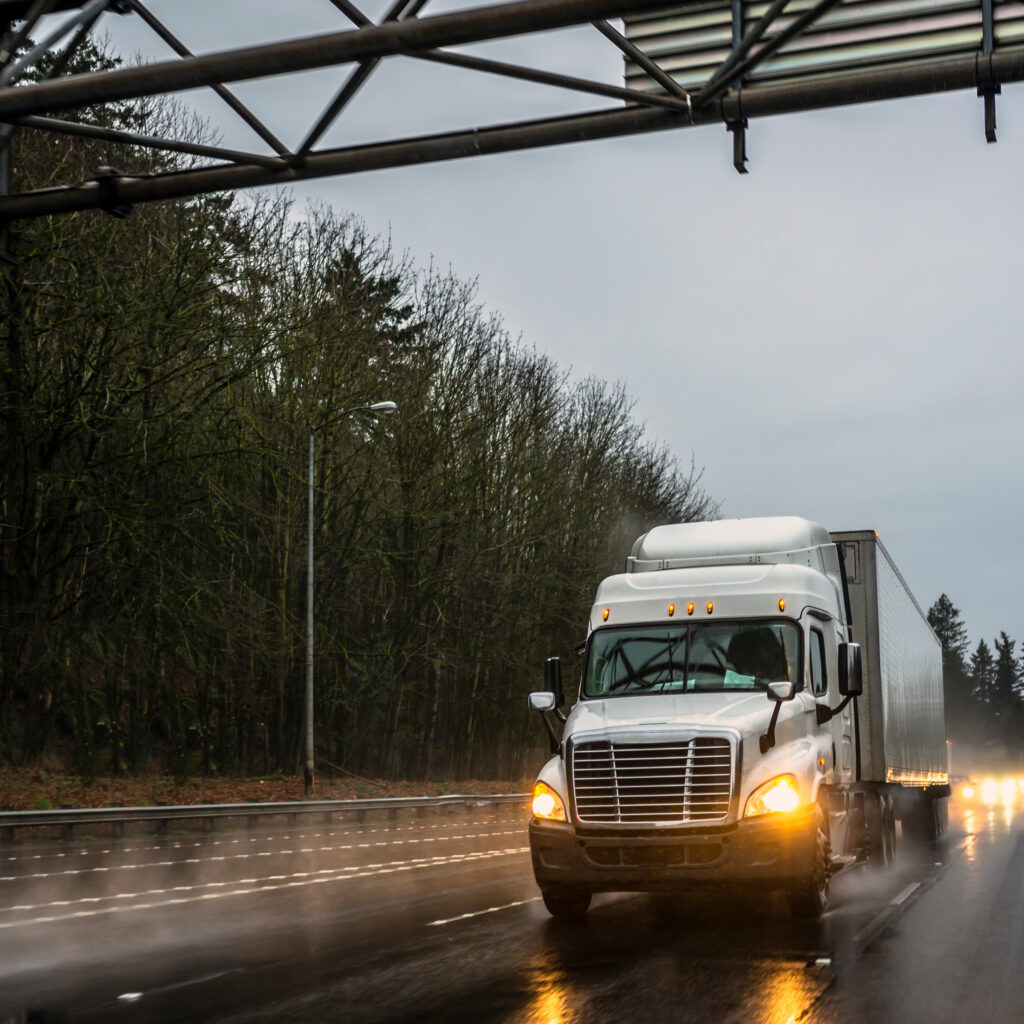
Hydroplaning happens when water builds up between the tires and the road, so the tires lose contact with the pavement. The driver can no longer steer or brake, and a heavy truck can slide across lanes or jackknife. Ice, snow, and fog create similar dangers.

Commercial drivers are trained to reduce speed in bad weather, and federal rules set minimum tire tread depths for trucks. When a driver goes too fast for the conditions or a carrier runs worn tires, they can be held responsible.

Common Causes

What Causes Hydroplaning & Weather-Related Truck Accidents

01

Unsafe speed for conditions

Posted speed limits are for dry roads. Safe speed in rain, ice, or fog is much lower.

02

Worn or underinflated tires

Tires without enough tread cannot channel water away from the road.

03

Hard braking or sharp steering

Sudden inputs on slick pavement can trigger a skid or jackknife.

04

Cruise control in bad weather

Cruise control can keep a truck accelerating when the tires start to slide.

05

Standing water and poor drainage

Road defects that let water pool can contribute to crashes.

06

Light or empty trailers

Lightly loaded trailers have less traction and slide more easily.

Who Is Responsible

Who May Be Liable

Liability in a truck accident case can extend well beyond the driver.

Next Steps

What To Do After a Truck Accident

01

Get medical care

Call 911 and get checked even if you feel fine. Some injuries, like brain and spinal injuries, show symptoms hours or days later, and medical records connect your injuries to the crash.

02

Document what you can

If it is safe, photograph the vehicles, the scene, the truck’s DOT number, and your injuries. Collect names and phone numbers of witnesses.

03

Say little to insurers

The trucking company’s insurer may call quickly. Avoid recorded statements and do not sign anything until you have talked with a lawyer.

04

Talk to a trucking lawyer

We move to preserve driver logs, electronic data, and dash-cam footage before it is lost, and we handle the insurers so you can focus on your health.

FAQ

Frequently Asked Questions

Yes. Drivers must adjust their speed and following distance for the conditions. A driver who keeps highway speed in heavy rain, or a company that sends a truck out on worn tires, can be responsible for the crash.

Every state sets its own deadline. In Georgia and Ohio, for example, you usually have two years from the date of the accident to file a personal injury claim. However, deadlines can change depending on your situation, so talk to an attorney soon to protect your rights.
Claims against government agencies for dangerous road conditions have special rules and may have shorter deadlines. Contact a lawyer quickly if road conditions may have played a part.

Talk to a Trucking Lawyer Today

We follow a clear, step-by-step process so you always know where your case stands. Your first conversation is free, and there’s no obligation.

Free. Confidential. No obligation.

Black Trucking Lawyers serves truck accident victims nationwide through office locations across the United States.

Talk to a Trucking Lawyer

Every state sets a deadline to file a personal injury claim, and evidence like black box and ELD data can disappear much sooner. Tell us what happened and we will explain your options.

Free. Confidential. No obligation.

Free. Confidential. No obligation. Your information is used only to respond to your request. Submitting this form does not create an attorney-client relationship. Privacy Policy